
How flame retardants work
How flame retardants work, and why the right dose depends on the resin, the thickness and the process.
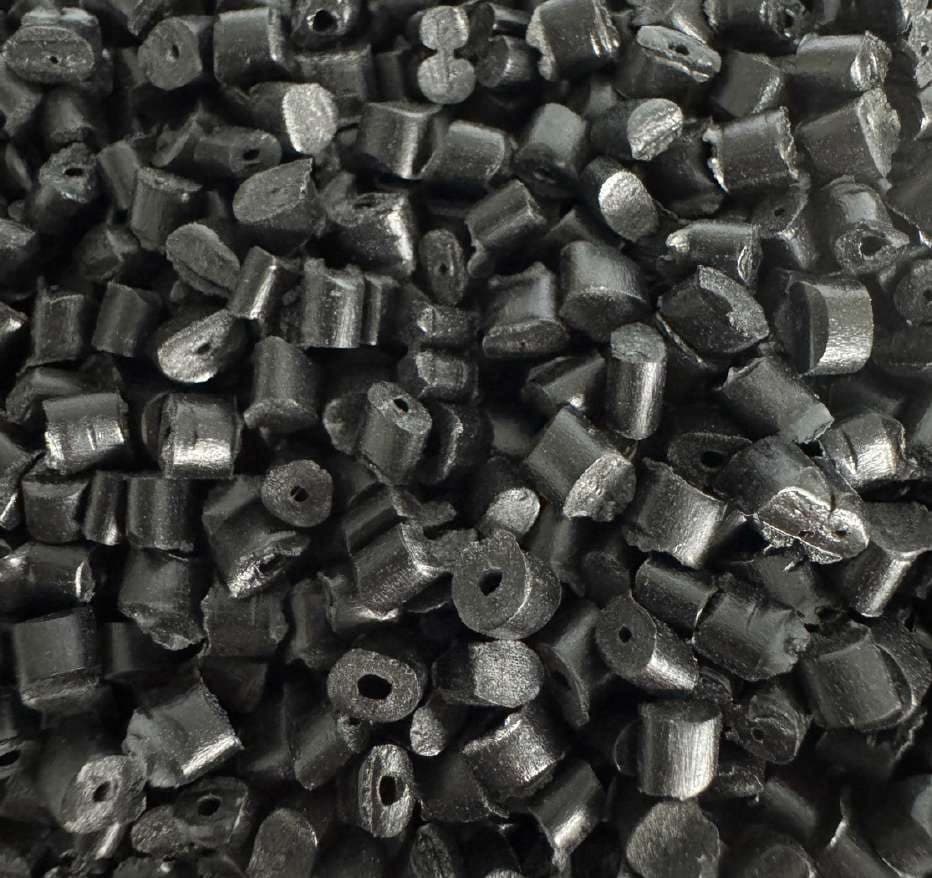
A flame retardant does not extinguish fire: it interrupts the combustion cycle. It acts on one of the three conditions that sustain it — heat, fuel and oxygen — and slows the rate at which the material feeds the fire.
The three mechanisms
- Condensed phase: the additive forms a char layer that insulates the polymer from heat and limits the release of combustible gases.
- Gas phase: it releases species that scavenge free radicals and interrupt the flame's chain reaction.
- Endothermic cooling: the additive's decomposition absorbs heat and releases water or inert gases that dilute oxygen.
Why the dose is not a fixed number
Safety starts with the right material formulation. Regulatory compliance does not depend on the additive alone, but on the interaction between resin quality, formulation, part thickness and transformation process. That is why NonFlame™ dose ranges are indicative, and the final classification — UL 94, Glow Wire or ASTM E-84 — is confirmed through technical validation.
Halogen-free by design
The NonFlame™ line is formulated with non-halogenated solutions, aligned with sustainability policies and compatible with requirements such as REACH and RoHS, achieving high flame retardancy with a lower additive loading.